Friday, November 2, 2012

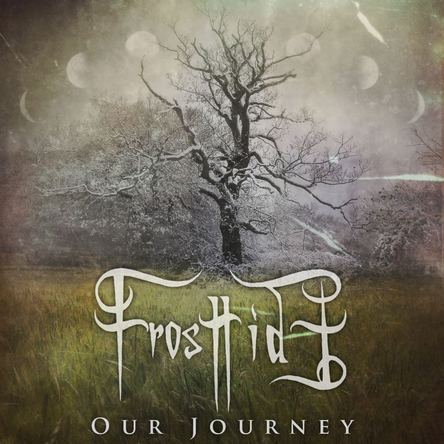
Frosttide - Our Journey (EP) (2012)


There has always been a misconception among the casual music fan that putting together a band is easy. There must be a flood of musicians out there, just waiting for the chance to make some good ol' metal. And while that isn't entirely false, that doesn't make getting the right lineup any easier. Case in point, Finnish folk metal band Frosttide who, despite their best efforts, haven't been able to field a full band for any extended amount of time. With a bassist and keyboard position left vacant, you would assume a gap would exist in the music. But there is something about their take on the folk genre that makes it all work, this three piece and their aptly titled EP, "Our Journey" is proof.

The unbridled energy that opens "Enemy Is Back" would be hard to duplicate in any other genre. Light backing synthesizers do wonders for the mix, elevating the sound. The thrashing of guitars and pounding of drums at this speed would be certain to leave your neck sore, but adding in some gritty, borderline death metal vocals is the key to the track. The growls become the conductor, leading and driving the track, giving a sense of urgency to the melodic tinged riffs, despite limited use. That same dynamic is at play on "Carefree Village," bolstered by a dance worthy guitar riff. The dual guitar attack, with the second one laying down a massive chugging section, is glorious. Once again, the keyboard part is a keystone of the track, adding just enough accent to be noticed, without crowding things. In particular, it shines through in the bridge section, giving a boost to a twirling guitar riff. The track is relentless and, if you aren't careful, could leave you drowning in its wake.

The same could be said for "Face Your Demons," which contains a kit drum sound that could only be described as huge. It is here that the production work shines brighter than before, balances a pounding drum kit with two guitars and a devastating vocal line. But even more than that, the mix allows for short acoustic and clean passages to mesh perfectly within that framework, including some intense string bending action. And when you decide to name a track "Assault," there is a certain degree of heaviness that must be included. But rather than make this one an all out thrasher, there are small pieces of melody that keep it afloat. Hidden in the percussion and growling lyrics is a pretty impressive guitar riff, one that could easily make you a believer. That riff becomes the foundation for the rest of the track, with a keyboard backing at the midway point only adding fuel to the flame. The longest track on the album, the closing "No Turning Back," is a text book folk track, taking all of the thrash worthy guitars, and putting them together at break neck speeds. It is here that the band is at their best, combining the hard nosed guitars and drums with a talent for melodic songwriting. The mix is done in such a powerful way that it leaves the track feeling much larger than a three piece band, a true credit to engineering.

Band members come and go. For Frosttide, it has been an absolute fact of life. Bass players, keyboardists, they fill and vacate their positions time and time again. Yet somehow, with all of the turnover, the three members are not only surviving, they are flourishing. The five songs on "Our Journey" are all the evidence you could need that this is a band on the rise. And while the folk genre is a crowded arena, there is something woven into the fabric of this album that makes it undeniably catchy, and undoubtedly a victory for Finnish metal. Forget adding extra members; this three piece is doing just fine without them.

8.5/10

Official Site - http://www.mikseri.net/artists/?id=130070
Facebook - http://www.facebook.com/Frosttide

Read more ...

Thursday, November 1, 2012

Band Profile: Fister


"If it's too slow, you're too young."

It was the album "Violence" that first turned us on to the St. Louis three piece known as Fister. It wasn't traditional doom. It wasn't exactly sludge. It was somewhere in the middle; a hybrid of heavy styles that could pound you into submission slowly, but effectively. The album name said so much about what lies therein, unlike some other efforts by lesser bands.

"If it's too slow, you're too young."

It was several months later, however, that our love for this monster came to full tilt. The release of "The Infernal Paramount" marked a changing of the guard in heavy music. Two songs. That's it. Two songs changed the way we were listening to metal. Blaring guitars, ringing distortion, and a pace that could rival watching paint dry. But together, it was god damn perfect. Just the background cuts on our interview with Kenny Snarzyk would be enough to convert you to fandom. There isn't anything else I could say to convince you. Just listen, and let their signature sound wash over you... and leave you bloody.

"If it's too slow, you're too young."

Read more ...

Wednesday, October 31, 2012

Secret Sphere - Portrait Of A Dying Heart (2012)


Ashamed. That is how I feel knowing that for fifteen years, a band known as Secret Sphere has been making album after album of symphonic metal without once crossing my wandering ears. From the city of Alessandria, Italy, guitarist Aldo Lonobile brought this project to life in 1997, long before power metal had ever come into my range of vision. Since then, six studio albums have come and gone unheard in my musical circle. But it is the seventh album, and first with former Vision Divine frontman Michele Luppi at the mic, that finally made it's way across the Atlantic, and into my speakers. Vased on the novel "She Complies With The Night," which was written by Costanza Colombo at the urging of Lonobile, the concept of dreams vs reality fleshes out in the form of a guitar heavy orchestral workshop known as "Portrait Of A Dying Heart."

Filling the role of the intro track, the long instrumental "Portrait Of A Dying Heart" is both ambitious and fulfilling. What stands out immediately is the ability of the guitar riffs and keys to carry the entire track without a vocal presence. Through a good number of tempo and tone changes, there is a melodic backbone hats plays perfectly off of a drum arrangement that is busy, in the best possible way. Instead of feeling crowded and claustrophobic, the track feels more wide open that you would expect, thanks in part to the more airy keyboard parts that linger and lurk in the background. The final minute takes a turn to the slower, more soothing piano style, showcasing some of the more subtle musicianship. With the added vocals on "X," you take a satisfying composition and elevate it into something altogether different. Singer Michele Luppi has a versatility to his voice that is often lost in traditional power metal. he can occupy the lower register, as he does in the opening verse, and the higher tones, as he does in the chorus. He also has just enough grit to give every lyric added punch. But with the vocal track taking the spotlight, you would assume the guitar would step back and resume a supporting role. Instead, Lonobile keeps his fingers moving, adding flourishes of melody and distortion every step of the way.

The orchestrations that lead into "Wish & Steadiness" are so rich with synthesizers and piano touches, alongside a choir of voices, that the track has lofty expectation thrust upon it. And with the first blast of double kicks and darting guitar notes, it does exactly as promised. Lonobile flashes some brilliant riffs, some dizzying and some flat out monstrous. This is where Luppi becomes key, as his voice becomes the glue that holds the whole instrumental together. With a drumming exhibition going on beneath it all, courtesy of an empowered Federico Pennazzato, there is a delicate, and noticeable balance to every segment. There is something unique in the way the band combines the heavy distorted riffs with keyboard and synthesizers on "Union," though it is hard to say whether it is by design or a beautiful coincidence. Despite being one of the more accessible tracks on the album, that combination of guitars and effects carries a lot of weight, even when packed into a short four minute framework. The power of Luppi's voice is never more evident than in the outro portion here, belting out his melodies with astonishing fervor. A few blazing harmonics fill the intro to "The Fall," set up to be one of the heavier tracks on the album. There is a tremendous amount of low end, provided by a series of kicks and toms and a consistent bass line, that drives the track forward. Throw in a pair of deep grunts, and you have a thrilling piece of symphonic metal. The outro alone is worth the price of admission, with guitars and keys trading blows.

Admittedly, the almost dance beat that peaks out on "Healing" was scary. But before it can latch on, the thunder returns, with a punishing gallop of drums cascading through your speakers. This may be one of Luppi's finest moments, as he lays down a vocal melody that is both catchy in sound and lyrical content. To say that the band possesses a sensibility in the writing process is an understatement, and tracks like this one are the evidence. There is a lot packed into four minutes, but never too much to handle. Even a lightning solo from Lonobile elicits a fist pump of approval. The shortest track on the album is also the most passionate. "Lie To Me" holds within its limits an emotional investment that is made by both the band and the listener. To call it a ballad wouldn't be fair, but it does embody a lot of the structural and lyrical tenets. It also provides a platform for Luppi to show off his range and vocal grace. To the opposite end, "Secrets Fear" is more of the bruiser, beating you back to your senses with a flurry of drums that could be described as "aggressive." The vocal harmony that inhabits the bridge and chorus is memorable in so many ways, and will go down as a highlight for many fans around the world. There is a beauty in the way vocal effects are used throughout the track, be it small bits of delay or otherwise, that adds a bit of depth to each line. If you only had two minute to spare, it would behoove you to listen to the final two minutes of this track.

Once again, the orchestral and piano elements take a starring role on "The Rising Of Love," a track that takes on the obvious subject matter. This is the most stripped down track on the album, but not in the way that you may fear. Instead, the guitars take a step back and delivering direct support as Luppi delivers unto you a powerful bit of vocal prowess, crafting a story that is both emotionally charged and easy to relate to. What you are left with is four minute of some of the smoothest instrumental and vocals in recent memory. Without the slightest bit of embarrassment, you will admit to swaying back and forth, both arms waving over your head. The way this song, in particular, plays out is a credit to the talent on display. And while it boasts a name that speaks volumes, "Eternity" does not last forever. But for a glorious six minutes, the entire story comes full circle and is tied in a neat little bow. Through the smallest pluck of a bass string, the building chorus of voices, and the airy use of synthesizers, you are being guided to a conclusion. It could be said that the final moments of an album stick with you long after it's over. And for this one, that means a single line, sung beautifully by Luppi, could echo in your mind: "We're not alone."

To take on the subject of dreams vs. reality in a symphonic metal album could be seen by some as overly ambitious, if not a tad insane. And for a lesser band, I would be inclined to agree. But Secret Sphere is just the band to rise to the occasion, taking the written word and making it leap out at you in a way that can't be described. Whether the album connects with you emotionally or mentally is not irrelevant, but it isn't the key to why "Portrait Of A Dying Heart" is such a tremendous success. Taken at face value, this is a brilliantly conceived and executed piece of metal music. If you go deeper than that, it is so much more. With every listen, small details present themselves and allow you to find not only a message to music; you may also find a piece of yourself.

9/10

Official Site - http://www.secretsphere.org/
Facebook - http://www.facebook.com/secretsphere
Read more ...

Tuesday, October 30, 2012

Playlist 10/30/12: This one is just plain scary

October 30,2012

This week, we get in the mood for the season. And by that, of course, I mean we want to scare the living shit out of any children who may be knocking on our doors. Some of these are downright frightening, and others just get you seeing red. Enjoy, and be sure to follow our Spotify exploits.

Your tracklist:

Burzum - Fraverdenstreet
Opeth - Heir Apparent
Dethklok - Briefvcase Full O' Guts
Finntroll - I Tradens
Insomnium - Where The Last Wave Broke
Swallow The Sun - Don't Fall Asleep (Horror Pt. 2)
My Dying Bride - My Body, A Funeral
Agalloch - Into The Painted Grey
Mastodon - The Wolf Is Loose
Devin Townsend Project - Lucky Animals
Read more ...

Monday, October 29, 2012

The Deadstation - Episode 01: Like Peering Into The Deepest Ocean Abyss. (EP) (2012)


Influenced by some of the biggest names in grunge, prog, and metal, Boston based The Deadstation have a concept. Delivering their own unique take on progressive metal through a series of "episodes" on their dystopian television station, this three piece can be described by a myriad of words and phrases, but run of the mill isn't one of them. With keyboard passages that would make a Dream Theater fan drool, vocals that seem like they are right out of alt rock, and drumming that is bruising if nothing else, they have formed their an avant style all their own. In the first installment, "Episode 01: Like Peering Into The Deepest Ocean Abyss," they take on the frightening thought of being swallowed whole, and do it with a memorable narrative.

As your broadcast begins, lonely, but eerily played notes ring out on "Hundred Foot Drop." The electronic elements that poke in are perfectly executed, leading into a guitar lead that has a blues feel to each string. But as you move from one track to the next, the explosive power of "Subsistence Defined" is enough to knock you backwards. You now have a completed mix, chock full of wailing guitar riffs, electronics, powerful drumming and synthesizers. To call the vocals versatile does not do them justice, ranging from high register clean singing to pitch perfect crooning. Lead singer Greg Murphy, who is also the driving force behind the drum kit, is sure to peak your interest through his signature vocal styles aplenty. But don't think for a minute that there is some gimmick at work here; to the contrary, the musicianship is anything but, laying down measure after measure of pulsing percussion and screeching guitar riffs. They manage to walk the fine line between theatrical and true metal prowess here, and walk it without a stumble.

And yes, the opening moments of "Drugs For The Pain Inside" may very well leave your head slightly cocked, trying to figure out exactly what could happen next. But the answer is not what you might expect. What develops is a rare mix of smooth bass, synthesizers and drumming, a soothing blend that erupts without warning into a devastating djent massacre. Somewhere beneath it all, delicate piano keys rise to the top, and launch a bizarre progressive metal piece. What springs from here is hard to describe, but remains completely riveting. Murphy's voice is unique, especially in the world of metal; something in his tone and delivery brings to mind Jared Leto of 30 Seconds To Mars, for better or worse. But the way he carries the load is what makes it all the more impressive, hitting the highs when needed, but never stretching outside his comfort zone.  Even the audio diary that makes up "August 4th - 3:21 AM" is enough to make the hair on the back of your neck stand up. What evolves from those early moments is a mix of Yes style keyboards and Dream Theater drum construction, with a single spoken voice, recounting being swallowed by the abyss. The storytelling is excellent, without ever singing one note.

Tying it all together, that same instrumental backing flows directly into "Anything But This, Anywhere But Here," where Murphy unleashes his singing voice again, over a battery of drums and synthesizers. In a combination of whispered text and clean vocals, he continues the storyline that the episode has laid out thus far. Then, once again, you are thrown for a loop. As "I Cannot Explain Myself Anymore" comes into view, softly played acoustic guitars are all you here, joined soon after by the lightest of bells. You are treated to something so soothing, a foundation as fragile as you could imagine. Yet, somehow, a keyboard and guitar led instrumental rises from these meager beginnings, and becomes something entirely new. That is, until the beat drops, and an aggressive guitar chugging kicks things into high gear. But it is from silence that "Slowly, But Surely, I'm Drowning" begins, and where it ends. The middle is a solemn affair, with softly played guitars and even softer spoken words.

There aren't a whole lot of words in the metal lexicon that can be used to describe what it is The Deadstation does. What subgenre could you assign to a band that seems to float between so many? Regardless, what you have here is an album that deserves to be heard. For those who think the creativity and thought has left the music business, this might be the shining star you have been waiting for. This effort is far from flawless, but with more episodes on the horizon, it would be a safe bet to think these three like minded individuals will return with yet another story, and even more catchy instrumentals. And just like the pilot of you favorite TV show, "Episode 01: Like Peering Into The Deepest Ocean Abyss" is enough to get you on board for the whole season.

8/10

Official Site - http://www.thedeadstation.com/
Bandcamp - http://thedeadstation.bandcamp.com/
Read more ...

Sunday, October 28, 2012

Weekly Rant 10/28/12: The Rise (Again) Of Vinyl

Ownership of vinyl seems to be easily categorized, breaking down into four different groups:

First, you have the old school vinyl owners. These are the people who own original pressings that they purchased, or inherited, for decades past. There is an appreciate among these people that seems to be disappearing; that notion that, at some point, this was the widely accepted format. Sure, it typically starts with the phrase "Back in my day," but that isn't entirely bad.

Second, come the hipsters. This group, which is the largest of the four, only keeps vinyl around just so they can say they have it. They own all of their favorite indie rock albums, classic rock notables, and a myriad of bands you've probably never heard of. It is this group that demeans the medium, but can be held largely responsible for the triumphant return.

Third, the artwork junkies. There are those fans who own a vinyl pressing of an album, simply because the artwork is bigger and easier to display. Justin, for instance, owns a small collection of records, but doesn't feel the need to listen to them. Instead, they are in frames, waiting to be hung for proud display of the different art styles. It would be short sighted to dismiss it, but far sighted to embrace buying music for art.

Last, the audiophiles. If you have ever had the opportunity to sit down and listen to an album on both CD and vinyl, you know exactly what is coming. While it isn't fair to say one is better than the other - they both have their merits in the audio world - the sound of a needles moving through the grooves of your favorite record is a sound that you will never forget. The entire experience is warmer, with every pop and crack woven into the music itself. Imperfections are gold, sometimes.

Regardless of which group you find yourself lumped into, the second wave of vinyl is good for everyone. And every time I see a band, big or small, offering their latest work on vinyl, it is hard to resist. If you are a fan of all things metal, listen to the latest Fister EP, "The Infernal Paramount" on your favorite turntable. Grab Baroness' "Yellow & Green" and let the deck spin. Maybe you will become a bigger fan of 45's or 33's than you ever imagined.

- Darrell
Read more ...

Saturday, October 27, 2012

Elvenking: The Interview

It isn't often you have a chance to sit down with a member, or members, of a legendary band. But tonight, we unveil our latest interview. Bassist Jakob sat down to answer all of our burning questions about the band, and the evolution from "Red Silent Tides" to "Era." There aren't enough thanks to be given for this opportunity.


First and foremost, we want to thank you for taking time out to sit down and answer some questions for us. It is an honor for us, in every way.

Jakob:
Hello guys, this is Jakob from Elvenking, thanks to you for the space you gave us and for
your interest in interviewing the band!

It seemed as though "Red Silent Tides," at release, had divided a lot of your fan base. Some loved the  evolution of the Elvenking sound, and some, like myself, were worried that it was a step in a dangerous direction. Looking back, is there anything you regret in the making of that album, or anything you think fans like myself just didn't understand?

Jakob:
Every member of the band is influenced by a wide range of music genres, from heavy metal to folk, hard rock, pop or classical music: therefore we always loved to experiment with our sound and we will never, ever, do the same album twice. I understand and I respect that some fans could have felt confused, but that already happened when the band introduced more extreme stuff in The Scythe album, or when they heard a totally acoustic work like Two Tragedy Poets. And if anybody thinks that Red Silent Tides was a “commercial” move, I can assure you that our music is way less “trendy” that most of the true-folk-death-viking stuff you hear nowadays.

When it came time to write the next album, did you already have an idea of where it would go? What were some of the major differences in the writing process from "Red Silent Tides" to "Era"?

Jakob:
We had a lot of interesting material, but we did not really plan to do a certain kind of album. Actually, during the songwriting and rehearsal process, it seemed like we were putting in this new effort all the music genres and experimentations that distinguished Elvenking in the past years. At the end, it sounded like a “back to the roots” album, where we reintroduced a lot of folk and acoustic elements, but also fast heavy metal uptempos and catchy refrains. Most of the songs and lyrics have been brought in the rehearsal room by Aydan and Damna, but also Lethien and Rafahel contributed with their stuff, while Symohn and me (the new entries!) had the difficult task to build up solid and technical rhythm sections.

There seemed to be a huge focus on heavier drum patterns throughout the album. Symohn really did some impressive work. Was there a decision made to go in the heavier direction, or did the songs just go that way on their own?

Jakob:
Symohn is one of the best Italian drummers, period. His drumming is astonishingly technical and his style extremely flexible from one song to another. I never played with a drummer like him and it is a daily challenge to follow his patterns with the bass! Clearly, in the fastest songs he had the chance to show his skills with no restrictions...and the songs went from “heavy” to “extreme”. Have a listen to “The Loser” or “Walking Dead”, for example.

Tell us a little about the instrumental track, "Ophale." It has so much beauty attached to it. Is there a deeper meaning to the music itself?

Jakob:
“Ophale” is arranged around an acoustic guitar composition brought by Rafahel; then, FolkStone multi-instrumentalist Maurizio Cardullo added flutes and whistles and that was the result. The idea was to have a restful and relaxing track to close the standard version of the album, opposed to the previous “Chronicle of a frozen Era”, which is instead one of the most technical and complicated songs Elvenking has ever written.

You have been referred to as the "godfathers of folk and power metal." But even more than that, you were a huge catalyst in the growing Italian metal scene. How have things changed for metal in Italy from the time your career got started, through now?

Jakob:
When Elvenking started writing their first material back in the late 90s, no one in Italy played that kind of music. Elvenking was then one of the very first Italian metal bands to gain international recognition and the scene has evolved a lot since. Now, even if we love our local fanbase and we would love to play much more in our country, there is too much offer and definetly less demand, the audience is getting lazier and lazier (fifteen years ago we travelled hundreds of KMs to see our favourite band play live – now that happens very seldom), and there are dozens of metal bands with a fiddler, haha!

How is your fan base growing or shrinking across the US, as opposed to throughout get noticed in America, or is Europe just a better metal continent?

Jakob:
I always felt like Europeans think that “to succeed you have to go to the US” and Americans think exactly the opposite! They are just two totally different areas and markets and only the best bands do great in both. Elvenking started having a very good response in the US since the ProgPower USA show back in 2008, and we are always thinking of our American fans. We are planning a radio promotion there and we really hope to cross the ocean for a tour as soon as possible!

Where do you think metal will be 10 years from now. Do you think it is still a growing genre, or has it reached its peak?

Jakob:
Hard to say. Heavy metal has always been a very successful music genre, surviving temporary trends and the opposition of most mass media, so I am sure there will be still a lot of metal to hear in the years to come! But I think that heavy metal, while sticking to its roots, has to evolve and introduce new elements and influences because we cannot play the same riff forever and ever.

How do you feel about downloading, and how do you think it has affected your sales and careers as musicians? And on the flip side of that, did you ever expect to become as successful as you have been in the music arena?

Jakob:
Yes, we also have to see how the internet/file sharing/social network thing evolves, because while it is a great promotion tool, it kills sales and reduces the number of professional bands. Success? Haha, what kind of success are we talking about? We are full of debts! Some of us are professional musicians, but others have day jobs. We are a medium-sized band, that means having a really tough schedule with big things to do like tours, festivals, interviews etc...but you don’t live out of it, and you have to manage a double-life!

Thank you again for giving us this opportunity, and congratulations on the success of "Era." It is well deserved.

Jakob:
Thanks to you guys! With the new album we are really starting a new ERA of the band and we
are looking at the future with optimism and enthusiasm. We look forward to meet you all on
the road!
Read more ...