Showing posts with label progressive metal. Show all posts

Friday, March 7, 2014

Cyrax - Reflections (2013)


Listening to any number of bands, you can usually pick out one or ten of the influences that brought them to this point in their career. Whether it be bands who gave them ideas, or entire genres that made them fine tune their sound, everyone has the laundry list of those who came before that they tip their hats to. The greatest success, though, is being able to take those influences, and turn them into something wholly unique, something you can call your own. Otherwise you become a glorified cover band. Cyrax, a new five piece act from Italy, have given themselves quite the conundrum. Their influences are many and diverse, a huge sampling or artists both heavy and avant, new and old. But as they try to find their own way in this world we call metal, their feet seem to be finding paths of those who walked before, rather than trampling new ground. And, for better or worse, their debut album, "Reflections" is exactly what the name would seem to indicate. But that name is the first, and possibly last thing on this album that truly makes sense.

If you've come looking for something conventional, you may have stumbled into the wrong neighborhood. Techno beats begin Doom Against True Hell, enough to make you question whether you've selected the wrong album from your playlist. They don't leave, but merely fade into the background during the bulk of the song. However, their presence is off-putting much of the time, especially in an album that boasts a very classic metal sound. The precedent that would seem to set is a disturbing one, one that makes each tracks beginning to be an anxious moment. My Kingdom For A Horse a strange track when taken on its own, but even stranger when compared to what the album looks like as a whole. Even the song's vocal hook is hard to digest, repeatedly pounding the title into your frontal lobe. The rest of the track is a sing-songy journey, only salvaged by a great sense of melody in the guitar leads. With even progressive more complex riff, The Moore Of Venice is the most serviceable chunk on the album, leaning more towards classic prog rhythms and away from dance club thumping beats. But even here, the interlude detracts from much of the momentum that had been built. There is little to no sense of flow or structure, which wouldn't be an issue of things didn't feel as disjointed as they do. The midway point and surrounding pieces could pass for a b-side from UK avant metallers Hell, if not for the subsequent breaks.

A symphonic opening comes as a huge surprise, especially given the title of the song it precedes is Fight, but with this album, it may be best to throw any ideas of the norm aside. stuck between an orchestral beginning and some beautifully sung male and female operatic vocals is a straight forward heavy metal middle, complete with virtuosic guitar performance. But, as before, the rhyme or reason in getting from start to finish is lost somewhere. The second half of the album struggles to stay afloat, with few bright spots left to carry the immense weight. Thunderlight has all of the emotional feel of true power metal, but falls short in so many ways. Like an M. Night Shyamalan movie, there are enough twists to make each one progressively less effective. broken into 45 second chunks, you can find a lot to enjoy, but combined into one track, it is a mess. And when you've stumbled through five tracks, the sixth one, a skewed ballad, is not the sort of relief you need. The album isn't a trainwreck, despite many of the faults we've covered thus far, but Feel The Essence Of Blues is far from the ideal album closer. Horns, walking bass lines and a full chorus of voices sounds like a match made in heaven, but misses the mark.

It's completely OK to not get it. There are tons of albums that are released every year that many of us might listen to, shrug our shoulders and simply admit that we don't see the appeal. Cyrax is a band with a million influences, and they try to exercise all of them all of the time. Unfortunately, that just isn't a formula for success. The album feels hectic and disjointed, with many of the songs sounding like a handful of clips taped together. The flow that is so essential in modern music just isn't there, and it means the listener doesn't have any central theme or sound to hang on to. As a result, "Reflections" fails in the most fundamental way; it doesn't give people a reason to keep listening, start to finish, or come back for more. By no means am I speaking in absolutes or facts. Different strokes, after all. But if this musical collective wants to appeal to the masses, they are going to have to narrow the scope of their music, and go for quality of output rather than quantity of styles.

5/10

Facebook - https://www.facebook.com/cyraxmetal
Read more ...

Thursday, March 6, 2014

Infinite Earths - Spiral From Spacetime (EP) (2014)


As someone who has been completely awash in the sea of all things metal for years now, I can speak from personal experience when I say that they, the outsiders, think we are collectively stupid; that we are somehow mentally deficient because we like heavy music. Maybe you've heard that mumbled in your direction as well. Afterall, metal is just Satanic worship and unintelligible growls, right? While we know that to be far from the truth, sometimes it takes a good example to sway somehow off of their near sighted viewpoint. Infinite Earths, once the side project of Fire In The Cave guitarist Kenneth Michael Reda, has now taken on a life of its own. And tangled in their web of experimental blackened metal are many of life's biggest questions, nagging at our minds for years at a time. To say they are just another band trying to be different is a disservice to both the band and their music. But perhaps one listen to their debut EP, "Spiral From Spacetime," and anyone who has questioned the intellect of metal fans and bands might feel differently.

There are moments of chaos that you'll find scattered over the course of Compliance & Complacency, though none of them veer too far off the beaten path. The greatest victories come in and around those moments, when brutal riffing gives way to eerie atmospheres and silken bass lines. Around the three minute mark, the strict dichotomy of styles clashes, a bursting set of guitars, drums, bass and vocals simply cutting out in favor of something nearly serene.When they return, they have changed; darting notes come back crisper and far more deadly. It's bizarre and almost nonsensical in its operation, but the end result is fascinating. The second track, Prelude, is nothing short of sublime, a dazzling movement of piano keys that moves as quickly as fingers up and down the fret board. The way it fades, rises, and launches the demonic bastard child known as The Godhelm into action is about the starkest contrast you'll ever be witness to. If there is something to be sure to note here, it is the complexity of the lyrics; they read like philosophical conversation and are far deeper in meaning than the grating screams of frontman J.J. Mazorra would let on. His clean vocals, however, manage to carry much of the weight of the topic at hand. The rarity this embodies - the combination of thought provoking material and brutally heavy instrumental - is mind altering.

Not to be lost, though, is how easily accessible this sound is. Intricacies in the guitars are easy to latch on to, but the fundamentals here are all right. Progressive influences can be heard throughout the record, but the opening riffs to When The World Was Infringed Upon scream forward thinking. Rapid fire notes walk the neck of the guitar while huge snare sounds crash from every angle. Mazorra walks the fine line between his vocal styles, each instance coming dangerously close to toppling the entire track on its head. But when it feels as though things are about to break apart, the entire band shifts gears and regains balance. In the final minute, you have a perfect example of a band who know their strengths and use them accordingly. A catchy hook in the guitar lead, a powerful vocal, and devastating rhythm section. If you do yourself the favor of reading the lyrics as they pour through your speakers, something else might strike you. The storytelling here, tied to those aforementioned existential lyrical quandaries, forms quite the tale of self discovery and growing universal awareness. This is surely no mistake, as every piece of music on this album ties together in what would seem to be an endless ball of yarn. And whether you see the title track, Spiral From Spacetime, as he beginning, end, or some point in between, it's hard to shake the feeling you get from screams fading over clean guitars.

Far be it from me to try to wrap up this album in a neat little bow; I don't think my grasp on the language has prepared me to lay down a string of metaphors or labels that will help you understand what it is Infinite Earths are doing here. To be quite frank, there are times in the course of this disc that I find myself wondering if I even understand it. But regardless of the ability to wrap one's head around the lyrical content and the life changing questions they may ask, there is an immediate sense of immersion in this music. It jumps all over the map from one moment to the next, yet it somehow feels right. It breeds chaos in one section, and perfect, seamless order in the next. How that comes together is anybody's guess. New mathematics might be needed. As you find that point in time and space where melody and merciless energy come together, you best jump on, tie it up, and keep it with you at all times, because you may never stumble on it again. Infinite Earths seem to have done exactly that, and captured that moment on "Spiral From Spacetime."

9.5/10

Bandcamp - http://infiniteearths.bandcamp.com/
Facebook - https://www.facebook.com/InfiniteEarths
Read more ...

Monday, February 10, 2014

Astral Domine - Arcanum Gloriae (2014)


It was a few short months ago that an album teaser made the rounds, floating here and there, and everywhere on the world wide web. Astral Domine, the band behind the music, was a name unfamiliar to not only our group of worthy constituents, but to many of the worlds most discerning power metal fans. WWhat the trailer contained, though would peak the interest of you and I, and everyone in between. Formed in 2011 by guitarist Luca Gagnoni, hoping to spread a peaceful message through his music, Astral Domine is a handpicked powerhouse that has something special to behold: trust. With the addition of each member, Gagnoni put his trust in their abilities, and their strength to help him complete his vision. With a mix of power and symphonic model unlike the stale, moldy efforts that have flooded record stores over the last few years (minus a few shining stars, of course), this Italian dynamo aren't here for a one off; "Arcanum Gloriae" is the first in what we hope is a long line of inspired albums. With artwork inspired by the critically acclaimed series "Game Of Thrones," Gagnoni and company embody everything there is to like about metal, without the dirt and dust of decades of recycling.

Rarely will you find an opening track as moving as "Arcanum Gloriae," in both story and delivery. The sweet female vocal tones are awe inspiring, with their male counterparts equally as impressive. It sets the scene as if it is the next in a fantasy blockbuster series, not far from Tolkien's grasp. The true beauty of this intro, however, isn't felt until "Holy Knights" begins. As a clean guitar melody welcomes the full array of instruments, the scope of what the band is trying to accomplish comes into full view; it extends beyond fantasy metal, and beyond power metal. The tremble in vocalist Marco Scorletti's voice makes for an added dose of emotion, all the while captivating in his delivery. But the key becomes not only how expressive he is, but how expressive the guitar leads are flanking him. Gagnoni elicits a powerful response through his playing, both powerful and peaceful at once. With influences ranging from traditional heavy metal to baroque, it stands to reason that the music itself would become a funhouse mirror for all things, bending their images into something similar, but all together unique. It's "King Of North" that does this most efficiently, bringing historical time periods together seamlessly. It is equally empowering and operatic, with sweeping solos to round out the mix, not only from Gagnoni, but his counterpart on keyboards, Yeshan Gunawardana. The choir of voices that joins in the final minute turns an outstanding track into a phenomenal one.

When the upbeat, galloping tempo is removed, as it is on much of  "Moonlight," the band still finds a comfort level of impressive levels. Driving riffs are replaced with smooth bass lines and the tickling of keys. Scorletti's voice takes on a low, rich timbre, fitting of the overall tone of the track. What stands out is the ability to embody a romantic track, without giving away some of the technical skill in favor of it. What Astral Domine does exceeding well, through their sound and substance, is tell a story without letting the story dominate all. Any imbalance would make "Tales Of The Elves And Pain" feel skewed or stilted. But instead, it rings clearly, minus a few oddly timed spoken passages. Gagnoni exerts a great deal of control over the room here, even in his restraint. It is the ability to rise and fall with the mood that allows the music to grow and evolve over the course of an album, and makes the follow up track, "Where Heroes Die," all the more impactful. Power metal stalwart Fabio Leone lends his voice to the nearly ten minute epic, an exercise in the pure and unadulterated craft of symphonic power metal. It is nearly flawless in design, and absolutely unassailable in depth. To say the guitar and symphony are breathtaking in their partnership would be a gross understatement.

Though Gunawardana has been heard throughout the album, "I Am The King" sees his skills taken to new heights, fluttering keyboards movements bolstering an already dense wave of strings and distortion. Add to that a sea of voices that poke through the mix in a full bodied choir, and once again, they ahve shattered the mold to provide something exhilarating. Just as easily, they slip into another downtempo, somber movement, with "My Lord." Despite not being an aggressive, attacking song, it has the ability to carve out a niche both on the album and in your listening tendencies. Its self awareness is key, allowing a light piano and whisper to conclude a moving piece. Its counterpart, however, couldn't be farther away on the album's arch. A show of power and grit emerges, a raspy, growled voice delivering commands to newly acquired slaves. It is a curveball in an album that has been predominantly peaceful in scope, but a welcomed one. It is a curve, not a 180 degree flip, and the added dose of speed and energy brings out even more to like in this lineup. And at only four minutes in length, it is a sprint, rather than a marathon. The finale, which contains the second vocal feature on the album, is triumph in song. With a contribution from Giuseppe Cialone of the lesser known Rosae Crucis, this is yet another symphonic masterpiece in an album full of them. If you can make it through the track in full without once swaying or nodding, you are too far gone.

We've made no secret of the dull, murky coat that has befallen symphonic metal; perhaps we overreact to certain acts, or have just outgrown most of them. But when a band comes along that can reignite that fire, even the most cynical of fans must take note. Astral Domine have done more than just provide kindling for a new flame; they have brought the wood, the fuel, and the flame, all in one album. It's symphonic metal like you've heard it before, but done in such a clean, crisp way that it sounds entirely new. Luca Gagnoni has done an incredible job assembling his group and building this project into everything he was hoping for. For all of the high points, "Arcanum Gloriae" sees its most impressive victory come in the total package. For as good as each track is individually - and they are all incredibly good - the way everything flows together, playing one track off of the next, is remarkable. For an album that seems daunting in terms of length, it is over in the blink of an eye. The next album might be the jewel in the crown of symphonic metal.

9.5/10

Official Site - http://www.astraldomine.altervista.org/
Facebook - https://www.facebook.com/astraldomine
Read more ...

Monday, February 3, 2014

Random - Pidanoma (2014)


What's in a name? Part rhetorical question, part honest inquiry. if you were to look through decades of heavy metal band names, there would surely be a large quantity that were one dimensional, and able to be taken at face value. Bands can pick a name that describes their goal, their sound, or even their heroes. Dying Fetus brings up imagery that fits their style. Rhapsody Of Fire implies symphonic elements. But then you have those that seem deeper than surface value. Opeth. Katatonia. So, which category, then, do you put a band who chooses a name that could be appreciated or maligned at any moment? Random, a three piece from Argentina, seem to have chosen a moniker that could be left open for a different kind of interpretation; an argument that you could never win, or, conversely, never lose. They play a style of music that screams avant garde or extreme, yet play it in a way that makes it seem easy to understand. Either way, listening to their latest album, an hour long journey titled "Pidanoma," is like an experiment in word play, timing, and a mind trip all at once.

There is something to be said about an album that grabs you from the very onset, something that "Pidanoma" does with little effort or time. The bass lead on to "Corto Normal" is as catchy as a hook, but as technically sound as a lead. The dizzying array of drum beats and cymbal crashes is fodder for any of a million styles of headbanging or hair swinging, pulling you further into their web of complex structures. Groove laden but beautifully heavy, it rests on guitarist and vocalist Raul Garcìa Posee to round out what would be the perfect six minute package. Not only do his vocals do that justly, but they fall into the category of being perfectly imperfect; cleanly delivered with a healthy dose of raspy energy. And while the intentionally cloudy and muffled "Ojota y Media" may be just a two minute interlude, it has a life of its own, living and breathing with a series of kick drums that cut through it all.

This is the music you fight; the music you try to resist but simply can't. Tracks like "Mee Chango" give you every reason to let go and allow yourself to fall into the center of the mix. It's the combination of the timely execution of basics, combined with the eclectic variations that works so well. Posee wails and howls over the top, but his voice is one with the mix below it. So, too, is the scant saxophone work of Adrian Terrazas Gonzalez, of The Mars Volta, that creates a sense of chaos at times, while providing calm at others. It's the ebb and flow here that dictates so much, rising and falling with each movement. All the while drummer Marckos Crosa tirelessly hammers down beats in minimalist and extreme proportions, sometimes delivering simple clicks before exploding into a an epic roll or fill. His work adds to the mystique of the track, one that brings to mind the freshness and avant garde history of free form jazz. There may be a point A and point B, but this is clearly not the straight line approach between the two, detouring into sweeping guitar melodies and aggressively plucked and slapped bass lines. It's like the trajectory of Naval ship crossing the Atlantic, looping back around in a pattern that may seem bizarre to those watching from afar.

What you have learned to this point, however cliche it might be, is to expect the unexpected; a fitting thought for a band with the name Random. But there is proof in the musical pudding that this music is anything but, and "Mia Gato Está Solo en la Oscuridad," translation aside, is exactly that.What seems like nonsense is actually a carefully constructed piece of art that resonates like the ringing distortion it uses. One passage is an airy melody, a guitar crying in the most moving way, and in the next you are peppered with a series of kicks and cymbals. Again, this can't be a mistake or coincidence that all of these oddly shaped pieces fit together in just such a way; this is meticulously planned, orchestrated and calculated effort on the part of three musicians with an endless stream of talent and vision. Around the eight and half minute mark, three divergent pieces of music come together. Separately, they would sound like noise, unfit for harmony. Yet together, as chaotic as it may seem, they work. Bassist Pablo Lamela Bianchi is a frontman in his own right, his bass work as dynamic as any lead guitar or vocal could be. The final six minutes here are mind boggling, yet breathtaking.

How is it that an album with no clear path can come full circle? It would be difficult to find a more fitting end to this musical journey than the diabolically long and yet not nearly long enough "Guri Guri Tres Piñas." Standing at a robust twenty minutes, it is the best example of contrast and progression that comes to mind. Building from a whispering melody, one that is so softly played, into a sea of crashing cymbals and rising vocals, it arches in the same way that the album does; up and down, side to side. Admittedly, this is not the something for everyone scenario that most bands strive for; you have to be willing to let go of your preconceived notions to fully immerse yourself in this. if you are stuck in the verse, bridge, chorus, verse, bridge, lead, bridge, verse, outro structuring, then you might want to sit this one out. But if you've ever wanted to see evolution take place right before your eyes and ears, there is no better place to start than right here.

So, then, we must reiterate the premise here. What's in a name? For Random, it seems to say so much, and yet nothing at all. Because what it describes is music without borders, without boundaries, that can come and g as it pleases without fear of failure. But what it also says is that there is no structure, or a lack of direction, something that clearly couldn't be farther from the truth. Somehow, these three men embody both sides of that coin so flawlessly that to debate either side would put you in the right. If you were to tell me that all three members recorded separate instrumentals, unknown to one another, and layered them together for the finishes product, only hoping it would mesh, I might be inclined to believe you. But if you told that they sat for months, figuring out new mathematics to make these time signatures work together and play nicely, only to record and rerecord until every note fit snugly next to the others, I would believe that too. Either way, random have proven to be a a force, redefining even the basis of their own name. And "Pidanoma" is an avant testament to it.

9.5/10

Bandcamp - http://randomprog.bandcamp.com/
Facebook - https://www.facebook.com/losrandom
Read more ...

Friday, January 17, 2014

Barishi - Barishi (2013)


Vermont isn't all maple syrup and forests that span miles; yes, those things exist in varying amounts, but there is more to one of the bedrock states of the north eats United States. One thing that might not have ever been equated with New Hampshire's neighbor is eclectic and rich styles of metal. They, too, exist in some form or another, but it has taken far too long for us to find the band that could become the face of Vermont metal for years to come. Barishi, a four piece outfit from Brattleboro, could easily be mistaken for a Black Crowes cover band when you view some of the band photos. There is something about their look that could fool you into thinking you've stumbled into a hippie commune. But when you press play, those thoughts are smashed to bits in a sea of ebbing and flowing psychedelic metal, melodically based, by heavily rooted in distortion and blissful accuracy. How a band can embody a look and sound that stand at odds with one another is something that this many years around the music business has yet to explain. But their self titled album fairly spits in the face of convention, and gives rise to mountain metal.

Poking through a sea of feedback, a wandering saxophone sets the mood for what will become an album full of surprises. "Sky Burial" is an introductory track of a different kind; not a direct two minutes, but a squealing, crying dawn over the mountain. It pulls the sun over the peaks, and shines a light directly onto "Holy Mountain," which is the beginning of things, in earnest. It's would be far too simple to take the easy way out and lump this into the generic progressive metal arena, but it would be difficult to eliminate that thought all together. As the saxophone, provided by Ron Kelley, screams over the top of a surgically precise brigade of drums and bass, it brings to mind the work of Ihsahn, not only in sound, but in vision. But the melodies here are stronger, lean more heavily on flowing vocal harmonies to set up screamed verses. But even when the vocals become aggressive and standoffish, the instrumental is crystal clear and brilliantly clean. An infusion of deft finger work complements what can only be described as an ear worm of a groove. The talent for creating lasting riffs seems to be what guitarist Graham Brooks has in spades, with each segment of "The Rider" burrowing deep into your ear canal. For his part, vocalist Sascha Simms matches the intensity of his counterpart, but also captures a sense of intellectualism in his lyrics, however gritty their delivery may be. The entire five minute duration of the track is an up and down, side to side, obstacle course.

But if versatility is important to you, musically, you won't be disappointed with where the album goes from here. It is on "Exibiche" that you find a strong grasp on the melodic and bright, clean strums of the guitar joined so flawlessly by a flowing bass line. It is almost mechanical the way everything remains in lock step with all of the other elements, but it is anything but rigid. There is a sway to it all, a soul to the music that shines through not only in the solo work, but the way the rhythm section and guitar leads elevate each other. It is musical symbiosis at work, something rarely heard in such a pure form. But arguably the most mesmerizing piece of art on the album, aside from the front cover that bends the mind, is the eight minute titan titled "Through Mountains, Through Plains." It is not the length that makes this track work, but rather the dedication to its construction. The vocals bend and soar over what would, at first glance, seem to be a rather simple mix beneath. Drummer Dylan Blake works in ways that are not mysterious, but purposeful. Every snap of the snare drum, every kick, snare, cymbal combination, pops through your speakers. It reels in the chaotic latter stages of the track, keeping the entire thing from going off the rails.

For every action, though, there is an equal and opposite one, something that "The Waves" will not soon let you forget. It crushes down on you with every bit of force the name would indicate, Simms screaming in the most deafening tone over a battery of drums and guitar. There is simply nothing held back, to such a degree that it's a wonder there is anything left for the final two tracks. It's insistent without being overbearing, and heavy without exhausting the listener. Conversely, "A Place that Swallows All Rivers" gives you ample time to sit back and let your head sway to some brilliantly conceived and executed guitar work. It comes back to those same melodic sensibilities you heard earlier, an organic growth from passage to passage, bolstered only by the constant of the bass work. Jonathan Kelley, much like his rhythm section mate, is blissfully accurate, and even more detailed than this music could reveal. His work, especially in the fluttery melody that comes before the three minute mark, is as steadfast and steadying as any in the business. That leaves only "Jaguar Scarification Ritual," a track as diverse and eclectic as the name itself. The beauty is the honesty with which it is written, recorded and played; this isn't weird for weirds sake, or winding just to say it can be. No, it plays out on digital media the way the band would hear it in their own heads. And that is a magical moment to behold.

I'm not exactly sure what it is inside the band dynamic that separates a half hearted garage band from a band with everything in their corner. It would seem that the smallest difference in talent and mentality can make the entire life of a band change for the better. Barishi have something going between the four of them that just seems to work on all levels; their is a comfort in each others abilities that allows them to relax and let the music flow from their collective minds. It would be an interesting day spent watching them write. The resulting music, whatever genre tag you choose to slap onto it, is harder to capture with mere words than you would have probably guessed. Where else have you heard this combination of sound and fury, with grace and dexterity, without once feeling ironic or contrived? In modern melodic metal, you might think for hours and not come up with another name. This four piece has something, personal, professional, mental, physical, that is hypnotic. And this self titled album is one that won't soon leave your iPod, or your mind.

9.5/10

Bandcamp - http://barishi.bandcamp.com/
Facebook - https://www.facebook.com/barishiband
Read more ...

Monday, November 4, 2013

Apathy - Beneath The Ashen Sky (2013)


"Viktor Jonas isn't a rock star. He is a musician. With every strum of the strings, press of a button, touch of a key, or twist of a knob, he is giving of himself for your enjoyment. And "Ghost Light" is the man himself, written into musical form." That summary first appeared on our site on August 15, 2012. Having just finished a lengthy review of the then new Apathy album, "Ghost Light," we found ourselves cutting to the core of the man behind the music. Some things have changed since then, but many more have stayed exactly the same. Viktor Jonas may never be on the cover of Metal Hammer or Revolver. That is probably for the best. His music speaks far louder than any cover story or expose ever could. And the return of Apathy, only a year later, is a blessing for the death/doom genre. He is still in control of all things instrumental, from guitar to bass, drums to keys; that will never change. But he is joined by a new vocalist, and a new set of songs that embody the man himself. That is what makes "Beneath The Ashen Sky" a captivating listen from beginning to end.

Despite thinking we knew what to expect, Jonas outdoes himself early in "Leper Tides;" his drum programming has returned more powerful than before, without losing any of the punch the kick drum provides. But all of the force of the drums would be wasted without an equally commanding guitar lead, something he seems to supply endlessly. Somehow, Jonas finds a perfect harmony between all of the instrumental pieces, a tricky process that few truly succeed at. The vocal component suits the mix well, as Philip Grüning screams his way over a sturdy foundation. That analogy, the one of the building, rings true over the course of these nine songs, each track adding a new floor. On "The Burial Ground," each drum beat pounds nails and rivets into place, a series of double kicks mechanizing the entire process. But it isn't all brute force; finesse plays a key role here, as Jonas crafts backing melodies and deep soundscapes. Each layer must protect the one above and below, so their timing and balance is important, if not crucial. One misstep, whether it be in the all out aggressive section, or the smooth melodic portion, could throw the entire track off the rails. Luckily, there is no such stumble, seamlessly flowing into "Typhoon." The dynamics are the same, offsetting heavy with soft, but there is no filler here; the bass work alone would be enough to make the track stand out, not to mention the strong performance from Grüning.

As you get into the mid section of the album, there is no let down to be found. "Fear Me" embodies it's title, with Grüning's screams becoming even more chilling. The clarity here is especially impressive, with each fragment of the main riff shining through clearly and crisply. That lead is one of the more catchy riffs on the album, an incredible feat given the driving tempo and harshness of the lead vocal. This is the most pure form of death/doom you'll find, borrowing heavily from both. But like the other titans of the genre, Jonas is not content to fuse those two alone; his use of melodic elements adds another dimension. To this point, the lyrical content has forged it's own path, but on "Murder Sun," the music and lyrics come together to form an unbreakable tie. Under the hammer and anvil of Jonas, the drums pound away at your very core, all the while Grüning rains down solar charged words of disappointment and hate. Having grown tired of humanities failings, the sun becomes a terror. The lyrics speak for the music, and the music elevates the lyrics. Together, they form one of the strongest songs on the album, one that connects directly to "Amongst The Dead." The imagery here is staggering, with each screaming verse painting a bleak picture of walking through a sea of corpses, echoed by the devastating instrumental.

When the pace slows down, albeit seldom, Jonas can deliver an even bigger blow. It's in times like these that it becomes hard to believe the drums are programmed. The depth of sound he has crafted in this computer driven kit is astounding, from kicks to snares, toms to cymbals. His work on each individual piece makes the structure stand so tall, never wavering, never fearing that it could all collapse under the weight. Instead, it grows stronger with each movement, the bass and drums anchoring the entire operation. It allows Grüning to reach deep and summon every ounce of hate and rage. The reward? A two minute interlude that shows Jonas at his musical best. As dynamic as he is as a multi-instrumentalist, it is the quiet, melodic moments that best showcase those abilities. It lets his creativity shine through in ways the metal genre doesn't usually embrace. This is the ultimate show of vision for Jonas, who calmly exits his solo piece, "Luna," and forges ahead into the last track, "Endgame." once again, the transition means everything, as he flows from one to the next. No jump, no skip, just a smooth bridging of the gap from solemn to pained. It also becomes the home for some of his most subtly beautiful instrumental work, captured so delicately in the lead and drum backing.

It's hard to throw the word genius around. There will be backlash, questioning, even ridicule. But what Viktor Jonas has shown, release after release, album after album, is that he is playing on a far different level than everyone else. He is a multi-million dollar corporation, erecting a skyscraper with the help of plans, machinery, and state of the art equipment; everyone else is back in Amish country, raising a barn. That isn't a knock on other bands who dwell in the same genre as Jonas, and by no means is it meant to tear anyone down. But after hearing what this one man puts together, it's hard to believe there are even bands in the same stratosphere. But luckily, he isn't alone; Grüning has written and delivered a performance of his own, one that completes the scope of the album. One without the other might not stand as tall, or even as firmly. But together, they are undeniable in their excellence. And while many have declared the death/doom genre dead, year after year, it's still alive and well. Apathy may have just erected a new headquarters, "Beneath The Ashen Sky."

9.5/10

Bandcamp - http://vjonas.bandcamp.com/
Facebook - https://www.facebook.com/pages/Apathy/116709615006241
Read more ...

Friday, October 25, 2013

Mahogany Head Grenade - Return To The Point Of Departure (2013)


What makes the greatest guitarists in the world truly great isn't how fast they can play, or how many ridiculous faces you make while you do it. It's so much more than that. What sets those players apart from the others is their ability to write cohesively. Sure, we all remember "Eruption," but what made Eddie Van Halen great was that he knew when to unleash a solo, or when a signature lick would fit into the grand scheme of a song. Far too often, the "look what I can do" attitude ruins guitar metal, a sad state of affairs that has only gotten worse in recent years. But Mahogany Head Grenade, for their part, are taking a different approach. This Dallas based three piece are staying true to the metal genre, without writing song after song rooted in hammer on/pull off dynamics. Instead, they are focused on the songwriting process, a collected effort between three musical minds that has the capability of producing rich, memorable tracks, rather than a few fleeting shred fests. Their new album may not be "1984," but it is a guitar driven album with all of the substance to stay around a while. And that substance, in guitar, bass, and drums, is what makes "Return To The Point Of Departure" an album worth hearing.

After an extended intro and sample, you would be hard pressed not to feel your neck snap back at the first thumping piece of percussion. Drummer Mike Pritchett isn't one to hold back or restrain himself, as is evident early and often. But here, he is the ground floor of a skyscraper, providing every bit of the foundation. The groove, the intense riffing of guitarist Dan Hyer leaps ever farther upward, exercising all of the shredding power of a Van Halen, with all of the thrashing devastation of Noud Smeets. He makes his guitar talk, sing, and scream over the course of nearly seven minutes, without the need for a breath or sip of water. The splicing together of vocal samples has a noticeable place in the mix, albeit as a background player. But it is the second track, "Trouble For Trouble," that will firmly ensconce this group in your brain stem. The guitar leads are catchy, but not in the sugary sweet vein of modern power metal; they boast a classic rock disposition, while still, ultimately, flexing a modern appeal. There is a thin line between a masterful hook and pandering, and Hyer has found that line and walked it according. He does, however, have the great equalizer at his disposal; the steadfast and groove laden bass work of James Falcon.

If it hasn't hit you to this point, "Vinedresser" is a stark reminder that this is only a three piece band, but with incredible depth of sound. Whether that be attributed to the production work or the songwriting structure, it is impressive on many levels. Speaking to the latter, they forgo the standard verse, bridge, chorus, verse, bridge, lead, chorus, outro pattern in favor of something far more freeing and expansive. While it often leads to unrestrained greatness, it can also go too far outside the lines. While there aren't any specific moments that stand out, "Vinedresser" does make a seven minute run feel equally long. On the contrary, "Etude War Machine" with it's electronic accompaniment, is about as well rounded and firm a track as you can find. This track, in all it's glory, becomes the signature of the album, a combination of intense riffing and a masterful rhythm section. Pritchett and Falcon aren't hear to keep time or provide a beat; they are adding to the mix at every turn. Bookmark the final minute for a reminder of how tightly put together this album is. After a line of longer tracks, the finale is this shortest, the four minute slugfest known as "Venetian Bricks." In what is a long line of guitar driven metal tracks, this is the final argument for how you make such an album without it feeling stilted.

We've all seen that guitar player on stage; the one that puckered his lips, clenches his ass, and moves his fingers faster than your eyes can follow. And by no means are we denying the skill that they display. But what Dan Hyer is doing is on a different plane of talent. Fast and slow, light and heavy, smooth and choppy, Hyer and company can do it all. They form a structure all their own, one that allows for some freelance solo work at times, but isn't rooted in that mindless shredding. His strengths are accentuated, along with those of his bandmates, as they've written songs that further than talents, rather than just spotlight them. There are sure to be many who disagree with the entire premise here; Rolling Stone magazine once listed the likes of Kurt Cobain and Edge from U2 over Randy Rhoades and Van Halen. But if you want to impress with a modern guitar metal album, you have to go beyond solos and hooks, and look deeper into the repertoire. And on "Return To The Point Of Departure," these three musicians have done exactly that. Maybe Mahogany Head Grenade are ready for bigger and better things.

8.5/10

Bandcamp - http://mahoganyheadgrenade.bandcamp.com/
Facebook - https://www.facebook.com/mahoganyheadgrenade
Read more ...

Wednesday, October 23, 2013

Ayreon - The Theory of Everything (2013)


With Ayreon,  Arjen Anthony Lucassen has created some of the most impressive progressive metal albums of all time. “Actual Fantasy”, “The Universal Migrator” and “01011001” are my personal favorites. I always felt that some of the albums such as “Into the Electric Castle” and “The Human Equation” overstayed their welcome. They just weren’t that interesting. Or it could be the fact that the space themed albums are what Ayreon succeeds at. Since 1995, Ayreon has been one of those bands that tries different things and doesn’t always succeed. Wait a minute, hold it. For those who don’t know, Ayreon is masterminded by Arjen Anthony Lucassen. Every album has different members and different storylines. Ayreon is the central character (not for a while though). I’m going to keep referring to Ayreon has a band in this review, not just one person. Anyway, Ayreon experiments a lot and most of the time succeeds at creating incredible landscapes of music. When I first heard the news of a new album in the works, I didn’t know what to think. Would it go back to the “Actual Fantasy” sound or would it sound like “Into the Electric Castle” again? Well I was way off. It does go back to the more organic sound found on “The Human Equation,” but it completely obliterated my expectations for an Ayreon album. Welcome to “The Theory of Everything.” Welcome to the future of progressive metal.

“The Theory of Everything” is divided into four movements. "Phase I: Singularity,” "Phase II: Symmetry,” "Phase III: Entanglement,” and "Phase IV: Unification.” Each part runs about twenty minutes and they each have smaller parts that could make up individual tracks. I like the fact that the songs are long but you can also skip to your favorite part of the song. Although it’s not recommended to skip through each phase, it’s just a nice addition. At first listen to this phase, it’s evident that pure love and care went into this album. There isn’t one misstep or low point on the entire album. The recurring songs “The Theory of Everything” are all mind-blowing. Through the album the one basic track keeps evolving until it ends with “The Theory of Everything part 3” which is one of my personal favorites on the album. That’s what this entire album does perfectly, evolution. The album starts and ends the same, so it gives it a full circle feel, with the middle of it transcending music. This isn’t just musicians getting together and making something off the top of their heads, this is pure musical genius that comes from deep within the soul. Tracks like “Potential” and “Dark Energy” are cleansing for the body and mind. I’ve never felt emotions like this through music. The album also has heavier tracks like “The Teacher’s Discovery” and arguably the best rack on the album, “The Lighthouse.” The variation of this album is outstanding. No song sounds the same but the flow is immaculate. Not one song is out of place and not one vocal is in the wrong spot. “The Theory of Everything” is Arjen Anthony Lucassen life’s work rolled into one album. Nobody does it like him and I don’t think they ever will.

As I’ve said before, Ayreon’s albums have been very uneven. “Into the Electric Castle” still doesn’t do anything for me. However, I’ve always been a fan, but now I’m a huge fan. I could go on and on about how groundbreaking this album really is, but I thought I would stop myself before I sound like an ass, unless that already happened. But I really don’t care and I’m not going to avoid the obvious. “The Theory of Everything” is without a doubt the future of all progressive metal and should act as a blueprint. Again, there is not one part out of place and not one track is boring. Different genres and sounds all combine to make something extraordinary. This is more than an album. It’s emotions, love and passion made into sound waves. “The Theory of Everything” is as close to perfection as you can get. It’s a master-class album that will be remembered for years to come and it’ll make bands wish they were this good.

10/10

Facebook - https://www.facebook.com/ArjenLucassenOfficial
Read more ...

Tuesday, October 22, 2013

Leka - Catopia (EP) (2013)


Anyone who has been fortunate enough, or unfortunate enough depending on your viewpoint, to have a pet has surely wondered what goes on in their minds. Cat owners, in particular, have to wonder what kind of plans are being hatched in that furry dome. With their popularity on the rise thanks to the various channels of the internet, it only makes sense that world domination is on the docket each and every day. Leka, a one man progressive death metal project from Finland perpetrated by Juuso Leinonen, has invested a good amount of time into this possibility. And through his melodic death compositions, he has concocted a satirical tale about the rise to power of our furry overlords, and their rule over all of mankind. Roles now reversed, with us as the pets, and them as the owners, a new world order is in place. And with the five tracks of "Catopia," their story will be told for generations to come.

With guest appearances attached to much of the album, not the least of which is the beautiful voice of Elise Karlsson, there are a lot more pieces at play than just one mind. But as "Offering to The Fluffy One" proves, this is no joke. If you aren't bruised and battered by the neverending stream of double kicks and machine gun snares, the high levels of distortion will surely catch up with you. But between savage beatings, Leinonen infuses a healthy amount of avant jazz stylings, something you would never expect here. Their effect is felt, but it cannot derail what is otherwise a blistering assault on the ears. "Hail The Evil" is no different, employing the full armory of weapons at his disposal. As the clean vocals of the verse give way to the explosiveness that follows, Leinonen may have found a perfect storm to sweep you up. Lyrically, the cat has risen, "An ancient evil, older than time itself, worse than the antichrist." The contrast of the early part of the track is not lost here, with that repeated clean passage setting up each subsequent explosion. By track's end, a chorus of voices, clean and harsh, chant together.

More than the other tracks, though, "The End Starts Now" is the perfect mix of metal and satire, with Leinonen crafting a track that is musically diverse, but also punishing when it needs to be. A true album highlight comes just before the two minute mark, as Karlsson and Timo Olkkola duet in a Vaudeville style, one that brings to mind recent works of uneXpect in it's bizarre nature. Once again, the creativity in the lyrics shines through, as Leinonen drops the bombshell line "It's useless, like dolphins, converting to Christianity, with no reason why." The words may poke fun, but the delivery is applause worthy. It would be damn near impossible to pick out a track that stands out more than the others, but the marriage of opposites on "Turncoat" might take the proverbial cake. In the verse, you have a blackened death metal delivery that rivals the best acts in the business; showing once again that satire may be tongue in cheek, but this isn't a gimmick. But you also get a soaring chorus, a  dynamic and powerful vocal component. You have the story at your disposal throughout the album, concluding with the aptly titled "The Purge." Every bit of blood and guts that is coming is captured in both the instrumental and the vocals, a terrifying means to an end.

It's no secret that metalheads are notorious for their love of their pets. As I sit writing, I have two sets of eyes fixed on my jugular, waiting for the time to strike. But this project, this work by Juuso Leinonen, has brought together many of the things we hold most dear; our pets, our music, and the crippling fear of being overthrown. It can't be stressed enough that subject matter does not disqualify an album under any circumstances, whether it be about Christianity, Goblins, or even cats. If you can't reconcile the lyrics and themes here, you would be more than welcome to digest what is one of the most intensely successful instrumentals we've heard in recent memory. But adding in the well thought out lyrics and story, you have an album that is something else entirely. Leinonen characterized the album as a "story about cute demonical creatures seizing the control over mankind," and he has done more than enough to get that across to us. But every riff is followed by a sly smile, concluding "Catopia" with the lyric that seals the deal; "It's so fluffy, So fluffy I'm going to die."

9/10

Bandcamp - http://leka.bandcamp.com/
Facebook - https://www.facebook.com/Lekaband
Read more ...

Tuesday, October 8, 2013

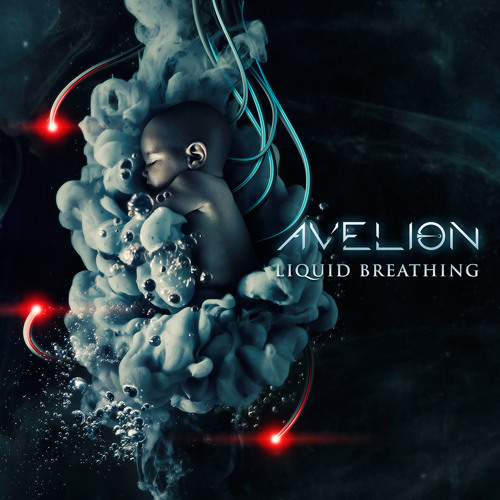
Avelion - Liquid Breathing (EP) (2013)


The life cycle of a band is much like that of a human being; we are born, naive and innocent. We grow up, learning how to manage our lives and skills. Then, at some point down the mysterious road, we die. So, too, do our bands, good and bad. But the key difference, and perhaps only difference, is the ability for a band to return to those infant stages and reinvent themselves. Avelion, having earned their toddler steps on their first EP, "Cold Embrace," stripped down and returned to the womb last year in hopes of forging a new identity. But in that second pass at birth, they gave up everything they had done on that album, and gave back any and all genre tagging as a result. Now, with five new members and a sound that is a far cry from where they stood two years ago, it is hard to imagine this band is even the same collection of minds anymore. But with the same name on the cover, and a new vision attached to it, success isn't immediate or even guaranteed. Because while "Liquid Breathing" signals a return to infancy, the music doesn't quite seem like it had enough time to gestate and evolve into it's final form.

As the title track leads things off, there is a noticeable difference in sound and structure. Gone are the soaring vocal passages and fluttering keyboard melodies, replaced by djent inspired guitars and airy synthesizers. The newly found electronic edge suits the track well, but lacks that unique quality. With each chugging movement, vocalist William Verderi uses his breathy, lower register tone to deliver what could be dubbed as a futuristic vibe. It isn't until the final minute of the track that we get the first full explosion, an eruption of growled vocals and unrestrained keys. Having established the electronic undertones, "Ain't No Down" only furthers that cause. Break beats and borderline rap vocals in the verse stand out, and your perception of them determines for what reason. While it remains a smooth transition in and out of melodic djent, those cut aways are less successful here, minus a great use of clean piano keys that provide a haunting backdrop. It fails to mix with the foreground in any meaningful way, even with a solid performance from drummer Damiano Gualtieri. Everything comes full circle in the final track, perhaps finding balance between melody and beat inspired mayhem. It isn't that "Mechanical Faces" is the best track on the EP; it can come off as slightly contrived. But it does house some of the best individual performances, particularly on chorus vocals and keys. But lost as a result is the identity of the band, falling into the trap of anonymity.

Major lineup changes are sure to alter the sound and direction of a band. But keeping the same name may be doing members, current and previous, a disservice. Avelion had begun to forge an identity two years ago, carving out a niche in the progressive metal genre that gave them a great deal of promise. But now, having replaced nearly every piece in the puzzle, they are left to try to figure out a way to make those oddly shaped parts fit together in a cohesive way, something that seem to struggle with on this EP. Perhaps it is more in the expectation that comes along with the name (like when every Metallica fan heard "Lulu"), but there is something missing here that can't be fabricated. By no means is this the end; as we said some two years ago, with time, Avelion may grow and develop into a band for the discerning masses. But having started over, they have stunted that process, and found themselves at the beginning. Much like the birth the title references, "Liquid Breathing" is in it's gestation period, with a long way to go until it's ready for the world.

6/10

Facebook - https://www.facebook.com/AvelionMusic.Official/
Read more ...

Friday, October 4, 2013

Lalu - Atomic Ark (2013)


In the long tradition of keyboard based metal, there has always been the need for a keyboardist that is both transcendent and creative beyond the norm. Without that visionary effort or talent, it is difficult to achieve top level results. Vivien Lalu is the kind of talent you search for; but he isn't a hired gun. His full band project, Lalu, is progressive at heart, but with so many tangential elements at play, that it becomes difficult to put your finger on exactly what they are. With marginally big names attached, both in regular and guest roles, Lalu has surrounded himself with top level talent, attempting to make an album that lives up to their 2005 debut, "Oniric Metal." But what he has done here is dig a talent pool so deep, so dense, that it would be difficult not to release a masterpiece of some kind. As a result, the sophomore slump is no worry, and "Atomic Ark" is a well conceived, well produced, and well executed taken on progressive metal that is as prolific as the name it bears. 

You'd have a hard time ignoring the early onset groove of "Greed," nor should you try to. Forming the backbone of the mix, guitarist Simone Mularoni may fill the rhythm role more often than the lead, but he does so in a way that is driving. The verse sections take a simplistic approach, while the tempo and intensity kicks up on the chorus, with vocalist Martin Lemar tasked with the none too easy job of completing the chain. His voice may not grab headlines, but he fits the bill here, providing an airy element to the mix. More pressing is the duel between Mularonia and Lalu himself, trading blows in a combination solo. That dynamic comes into play frequently, with tracks like "War On Animals" allowing the two to coexist in a way that makes them both stronger. The subtle intricacies that you'll find buried beneath the surface make the song that much better, whether they be the smoothness of the bass line, courtesy of the familiar Mike LePond, or the way Lemar bends his voice to fit into tight spaces. The shifts in spotlight are as numerous as the tracks themselves, and "Tatonka" sees Lalu splitting the main focus with drummer Virgil Donati. His bombastic style does wonders in the heavier segments, while his precision is key when the clean guitars take the lead. Lalu takes the refined approach, adding a layer of piano keys that dazzle as much as they shine..

The short but intensely sweet "Mirror Prison" is a ballad by definition, yet it extends beyond that word. Lemar's goes high and low, trembling along the way. The soft picking of clean guitars creates a mood that matches his tone magnificently, as a gently atmospheric keyboards glide you to the finish, and into "Deep Blue." They become parts of the same whole, almost as if one is the appetizer, and the other the main course. With the entree, you might not rise above a low simmer but thanks to the marvelous cohesion between all the pieces, it feels complete. Donati's input, in particular, does a tremendous amount of leg work here. More than how it sounds, though, is how it fits into the scope of the album; that is to say it is a fitting transition. Turning to the more avant garde side, "Bast" is an album highlight, thanks to the varied and ethnically tinged instrumentals. Mularoni hits the chugging passages with a delicate sense of timing, while Lemar soars over the top, only to come crashing back with a series of unexpected screams.  The track culminates with a winding, chaotic guitar, drum, bass assault. But where "Momento" begins couldn't be farther away, a beautiful melody that rises and falls throughout the track. Every element shines here, with the rhythm section taking a commanding performance to new levels entirely. LePond and Donati bunker down in the low end, and add punch to a mix that would be little without it.

That same system works for "Follow The Line," one of the larger sounding productions on the album. Lemar, still forming his own identity, is at his level best here. But in addition to strong performances from al the key players, you have a jazz funk thread that runs throughout, eliciting a head nod or ten along the way. Harnessing a lot of the left over raw energy, "Slaughtered" is a track as unique as the band itself. Between the carnival atmosphere of the bridge, and the intoxicating layered vocals that follow, you have a lot to digest, in the best possible way. It leaves, of course, only the closing track to finish the job. When that finale is nearly twenty minutes, it becomes an album in and of itself. It takes on a life of it's own, with a handful of different movements contained with its walls. It hits on all levels, with few flaws for a track that boasts this length. Lemar, however, has a mixed effort here, his grunts sometimes feeling forced, especially combined with a lyrical performance that doesn't stand up to the rest. But as he regains form, so, too, does the track at large. Lalu orchestrates a brilliant mix here, finding that delicate balance between all of the pieces at play.

There are numerous takeaways from this album that deserve mention, and not nearly enough space to mention them all. But what Vivien Lalu has accomplished here is nothing short of a rousing success, keeping the sound all his own, while still absorbing the input and talents of musicians in the upper echelon of their craft. There are no true pitfalls to be found; the tracks are, for the most part, short and deliberate, leaving no room to a listener to get bored or reach for the skip function on their player of choice. But what remains most impressive on the first listen as it is on the twentieth is the ability to flip the switch, and go from blaring and dynamic to soft and brooding. It's as if they know exactly when to exercise restraint, and when to let loose with the bursts of creative energy. Much of that skill traces back to Lalu, and his ability to blend and manage his worthy constituents; but they deserve the shared credit, and they've also bent their normal output to fit into that larger mold. That give and take is exactly what you need to release an album as strong and unique as "Atomic Ark."

8.5/10

Official Site - http://www.vivienlalu.com/
Facebook - https://www.facebook.com/vivienlalu


Read more ...

Thursday, September 26, 2013

Waves Of Mercury - As Seasons Fleet (EP) (2013)


We've often spoke to bands rising from obscurity about the difficulties of fielding a full line-up; hence why there are so many one man bands flooding through the scene. For David and Greg Richardson, a full band just never panned out the way they wanted to. After their attempts failed in 1998, they brought the their work to the studio as a duo. Greg would supply guitar and fretless bass, while David would provide the drums and vocals. With help in the lyric department from a handful of writers along the way, they would, several years later, come to be known as Waves Of Mercury. Their foundations lie in the world of doom metal, down tempo and emotionally savvy, but with an emphasis on intricate guitars and melodic harmonies. But where their creative influences begin and end is the true mystery, with some pieces of their work sounding like hero worship, while others could be signs of a lucrative future. Either way, "As Seasons Fleet" will sound familiar.

With the main component echoing the traditional doom sound of My Dying Bride, "Spring's Hollow Bloom" is a six minute evolution happening before your eyes. Instead of a one dimensional track, it changes; the harmonized vocals are the mainstay, while the music surrounding them comes and goes in waves. The shift from doom to progressively more melodic clean passages is an easy one, particularly with a intelligent bass line to pull them along. Layering is key here, with different comnbinations of guitar, bass and drums playing off of one another. Conversely, "The Dying Of Our Summer's Day" is not as successful an endeavor, with the vocals in the verse feeling forced at times. They are immediately redeemed in the chorus, thanks to the psychedelic tremor in the voice of singer David Richardson. A more high tempo second half does wonders for the track as a whole, especially when it is filled with deft musicianship.

The more emotionally written "Falling In Autumn," with lyrics by Antony Johnston, seems to be the best fit for the duo performing it. Classic sounds dominate here, cutting back and forth between driving guitar riffs and smoother ones, bringing together Blue Cheer and Sabbath at times. Greg Richardson, the man behind the strings of guitar and bass, does some of his best work here, mirroring his winding guitar melody with a bass line that moves almost as nimbly. Choosing to go for the most straightforward track on the album as the finale, "Winter, Your Fortress" is a difficult one to dissect and reconcile. You have a song that, for all intents and purposes, is a carefully crafted doom masterpiece, rivaling the current My Dying Bride catalog. However, when David Richardson unleashes his odd whisper growls, it fails to gain any traction. His normal, clean vocal suits the style, as does the spoken word he unveils here; but the other, more passive aggressive side of the coin falls short. Greg, on the other hand, thrives in this setting, creating astonishing amounts of mood with his work.

For as good as the work is by the Richardson duo, this latest output by their Waves Of Mercury project doesn't resonate the way you hope it will. The pieces are in place, but there is something missing. Perhaps it is Johnston's lyrics, which seem to pull David out of his comfort zone at times, causing a few ill advised vocal changes. Or maybe it is that the music itself too closely resembles one of the undisputed titans of the doom genre. Whatever the reason may be, there are plenty of selling points to be found on the EP; picking out which ones work or don't work for you is another story. But with this duo working together, you can be assured that you will get something well above the minimum expectation. How far above remains to be seen, of course. Much like the seasons they reference, their sound changes over time. Where it ends up after "As Seasons Fleet" will play a huge part in how bright their future can be.

7/10

Bandcamp - http://wavesofmercury.bandcamp.com/
Facebook - https://www.facebook.com/wavesofmercurymn
Read more ...