Sunday, July 7, 2013

The Podcast: Episode 90 (Top 10 Albums Of The Year... So Far)

Yes, the time has come. Six months down, six to go. And as a result, we unveil our top 10 albums of the first half of the year. Brian and Darrell have worked hours upon hours to narrow the field down to a mere 10 each. It's tough, but someone has to do it. Remember, review score aside, these are the albums we've listened to most. Without further ado, Darrell counts them down!


Brian's List:

1. Dark Tranquility - Construct (Review)
2. Sirenia – Perils of the Deep Blue (Review)
3. Heimdall - Aeneid
4. Kalmah – Seventh Swamphony (Review)
5. Avantasia – The Mystery of Time (Review)
6. Shade Empire – Omega Arcane (Review)
7. Dark Moor – Ars Musica (Review)
 8. Heaven Shall Burn - Veto (Review)
 9. Tyranny of Hours – Tyranny of Hours (Review)
10. ADE - Spartacus (Review)


Darrell's List:

1. Omnium Gatherum - Beyond (Review)
2. PelleK - Ocean Of Opportunity (Review)
3. Fister - Gemini (Review)
4. Orphaned Land - All Is One (Review)
5. Gloryhammer - Tales From The Kingdom Of Fife (Review)
6. Ghost - Infestissumam (Review)
7. Anciients - Heart Of Oak (Review)
8. Appalachian Winter - Ghosts Of The Mountains (Review)
9. Sons Of Aeon - Sons Of Aeon (Review)
10. Cult Of Luna - Vertikal (Review)

Honorable mention for an album that wasn't metal enough to go on the list: Bruce Soord With Jonas Renkse - Wisdom Of Crowds (Review)
Read more ...

Saturday, July 6, 2013

The Podcast: Reader Questions, Volume 3

Another 7 days go by, and another batch of reader submitted question for me to answer. This week, the inbox was full of quandaries and queries about Spotify. Rather than do an entire podcast (again) just about that, we picked a few others. In episode three, we tackle the question of whether get some money is better than no money, what our ratings REALLY mean, and what started me down the road to metal.

Keep 'em coming! Send your questions to sorroweternalblog@gmail.com, hit us up on Facebook or Twitter!

Read more ...

Friday, July 5, 2013

Edenbridge - The Bonding (2013)


Much like the other genres of music, female fronted symphonic metal is a crowded room, and a tough one at that. There are the superstars, the top tier bands that are always on the tip of everyone's tongues. On the flip side, there are amateur acts that are a dime a dozen. Literally. Disposable, nameless, and gasping for breath, this mass is responsible for making the music industry so hard to sustain. But in between those two chunks lie the others; bands that are way too good for the chopping room floor, but haven't broken through the glass ceiling to the upper echelon. For fifteen years, Edenbridge has dwelled just below the mountaintop. Their previous seven full lengths have made the rounds, with copies landing in every corner of the globe. Yet they simply haven't broken through to the other side. With the release of "The Bonding," their eighth studio album and first since 2010, the two remaining founding members won't settle for anything less than their best. But what they have may fall short of those lofty standards.

With driving guitars and a flurry of huge drum sounds, "Mystic River" wastes no time in agging you into the center of it all. The swirling symphonics are rich, easing the transition from intro to verse, as frontwoman Sabine Edelsbacher lets her tone say so much more than her lyrics ever could. Her voice, which manages to find harmony between operatic and accessible styles most of the time, sits gently on top of a mix that is packed full of distortion and airy keyboard work. A quiet interlude takes over, much like the score of a Broadway show, setting the scene before a blazing set of solos. With double duty on both guitar and keyboards, Lanvall is his best friend here, pushing himself further and further. Even in a smaller package, like "Alight A New Tomorrow," he keeps the tempo moving at the right speed, which isn't always the fastest. The bridge section, ignited by a piano, is the perfect example. It focuses on each detail in a much slower tempo, allowing you to appreciate parts of the whole more effectively. The ballad track, the four minute "Star Crossed Dreamer" is disposable, if not complete dead weight. It does little to further the album, and with a mix that isn't as crisp as it should be at this stage of the game, it fails to highlight the vocals talents of Edelsbacher properly. It takes a full three minutes for things to fall into place, leaving no time for expansion.

All is forgiven, though, thanks to "The Invisible Force," a track that is as heavy as any the band have done to date. Gritty guitars get the powerful backing of the full orchestral arrangement, including a set of horns that blare through your speakers. The bass work here is a highlight, with newest member Wolfgang Rothbauer showing his mettle at every twist and turn. But for an instrumental to boast this much aggression, it feels like something is missing, vocally. Whether it be a harmony or change of tone, Edelsbacher failed to meet the band halfway. A smoother opening on "Into A Sea Of Souls" seems to do her well, bringing back an edge to her voice that was missing. Buts its positioning in the mix, especially in the verse, leaves it feeling disconnected at times, only to rejoin the group in the chorus and bridge. Luckily, but not by chance, Lanvall is there to break off a signature riff and rescue the track from fading. But for every piece of momentum gained, it seems as though just as may are lost in the early stages of "Far Out Of Reach," which plays like a ballad confused for an opera, or vice versa. The operatic segments are glorious in their writing and execution, Edelsbacher soaring over the bed of symphonic and orchestral elements. How they are offset in the flow by watered down ballad injections, though, is alarmingly ineffective. Taken as separate pieces, they are workable; but together, they are counterproductive.

That on again, off again type of relationship they've constructed here can be rewarding, as it is when the "on again" half returns on "Shadows Of My Memory." A single growled roar does wonders for an albums latter half, and when coupled with a powerful female voice, it can burn the place to the ground. This is the best the album has to offer, finally finding that level piece between beauty and the beast. The storming gallop of drummer Max Pointner shines brightly, injecting life when so desperately needed. It makes the five and a half minute track seem like a flash something they had failed to do to this point. But for some reason, another ballad is blocking the stone from rolling down hill. Yes, "Death Is Not The End" is stronger than the previous installments, but with only one step to go on this journey, it's placement seems odd at best. It leaves all of the chips riding on the title track, "The Bonding," to make this album a  winner. It succeeds in every possible way. In one, fifteen minute deluge, you are poked, prodded, hammered, and caressed. The band hits their stride, albeit it very late in the game, at the perfect moment. The guitars are heavier, the symphonics are deeper, and Edelsbacher gives her best performance on the disc. Paired with that equally strong male voice, you finally get the full picture.

A lot of things go into making an album a success or failure, and it is impossible to point to one thing and say that it was the underlying cause for the result. In the end, Edenbridge have an album that they can be proud of here. But is that enough to hang your hat on? For a band in the middle of their fifteenth year of existence, there were mistakes made that seem uncharacteristic. The setbacks are strategy related, with the ordering of the songs preventing them from gaining speed and momentum throughout the album. And while that seems minor in the scale of things - the songs, individually, are all good - it can be the difference between someone listening to an album as a whole, or skipping through. In this day and age, the era of digital music, playlists, and music fans who go for singles rather than whole records, that is a dangerous precedent to set for yourself. if the title track becomes the cut of choice, it might open up a new wave of fans from across the world. Otherwise, "The Bonding" might never get the credit it deserves.

6/10

Official Site - http://www.edenbridge.org/
Facebook - http://www.facebook.com/pages/Edenbridge/65841432999
Read more ...

Thursday, July 4, 2013

Dol Theeta - Keep Deep (EP) (2013)


Thanasis Lightbridge isn't a household name, at least not in the global metal scene. He is noted most often as an electronic artist, but his interests and talents go far beyond hitting play on a MacBook. Through his various side projects, he explores the common ground between electronic music and metal, even going so far as to dub his website and DIY label "Electronic Art Metal." And while this combination has been explored ad nauseum, to mixed results at best, that hasn't stopped Lightbridge from moing forward with his Dol Theeta moniker. Here he combines his manufactured beats with crunching distorted guitars and a beautifully symphonic voice, hoping to find that legendary shared space that few have achieved. On the latest release, the newly unveiled "Keep Deep," Lightbridge and company do a lot to help their cause.  But if one new song, one orchestral "remix" and one cover song are all we have to go on, it might be too soon to tell if this is a match made in heaven.

That focus on electronica is inescapable, with the opening to the title track flooded with a slew of beats and robotic elements. But as piano keys cut through, you get the inkling there might be more in store. An angelic female voice leads the way, with Kortessa barely bridging the gap between trance and metal. It isn't until nearly the five minute mark that the assimilation becomes complete, with the first emergence of distorted guitars filling in the blanks. With what seems to be the faint sound of bagpipes peeking through and a wave of double kicks, you can now see what is afoot. Perched precariously between techno and symphonic metal, "The Universe Expands (The Big Bang)" manages to provide many of the highlights of the EP, with the stretch around the four minute mark coming through beautifully. There are times when the mix seems sloppy, mostly due to overcrowding, but they are few and far between. The final track, a cover song of sorts, is a reimagining of the 1596 John Dowland piece "Flow My Tears." It is well crafted, with a voice that could move mountains in a single breath. Kortessa croons sweetly as lightly plucked guitars and even lighter drum beats are the only backing necessary.

I can hear it. Sometimes you have to turn your head just right, lean a little to the left, and strain your inner ear, but the sound is there. At it's best, "Keep Deep" is proof that dance and metal music can not only coexist, but thrive together. Lightbridge has found that plateau between the two that allows for them to mingle. This success, though, isn't as clean cut as you would think. The voice of his collaborator, Kortessa, does the lion's share on the EP, her tremendous range and tone driving the unity of the two styles in incredible ways. Without her contribution, it would be hard to say if this would be the same type of review. Either way, Dol Theeta has earned more study. With each subsequent release, they have a chance to further their journey, or throw everything they've done off a cliff to its doom. And that is the true danger here; there is no stability in this type of fusion. One track works, maybe the next doesn't. One EP sounds great, the next loses the magic. Trail blazing was never easy. But the path to dance and metal harmony is a rocky road.

7/10

Bandcamp - http://doltheeta.bandcamp.com/
Facebook - http://www.facebook.com/electronicartmetal
Read more ...

Wednesday, July 3, 2013

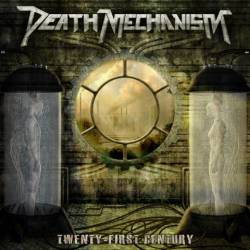
Death Mechanism - Twenty First Century (2013)


Growing up listening to 80’s thrash metal was a gift. Bands like Sepultura and Dark Angel really pushed the boundaries of what thrash bands could achieve. Twenty odd years later, older bands are still putting out great, but not mind-blowing, albums. These older bands, however, are making room for new comers such as Havok and Warbringer. While both bands are very good at sounding old-school, they lack the heart and soul of the bands they are trying to emulate. What the genre needs is a band that is strictly in-your-face, unapologetic and more old-school than old-school. Ladies and gentleman, such a band has finally arrived. On “Twenty-First Century,” Death Mechanism delivers something so fierce and unrelenting, it demolishes their first two albums. You’d also swear that it’s from the 80’s. Welcome back to the Golden Age of thrash.

One notable difference from the rest of their work is that the production value is much better.  “Human Error .. Global Terror” and “Mass Slavery” were good, but very muddy sounding. Produced and mixed by Coroner’s Tommy Vetterli, this album is crisp and very full sounding. Pozza’s vocals have never sounded more demonic and his guitar playing hasn’t been this tight. Manu’s drums are more chaotic than they’ve ever been and Pedro’s bass is very fulfilling. Each song is played with precision that bands lack nowadays.  Songs like “Monitored Procreation” and “Centuries of Lies” have tempo changes that would make Slayer jealous. They also experiment more on this album than before. “Collapse 2000 A.D.” is a great change of pace and shows that they don’t always have to be blisteringly fast to sound good. Tommy Vetterli’s solo on said song is also great. “Tipping in Front” and “Human Limits” are more groove focused, which changes the pace of the album for a little bit, but then gets right back into it with “Obsolete Cults,” which is probably the best track on the album. “Hidden Legacy” and “Exotropy” are the lowest points on the album. While not bad by any means, they just don’t do anything else but re-tread what the album has already done.

What Death Mechanism have created with “Twenty-First Century” is a time machine that goes back to a time where thrash was loud and vicious. While it isn’t entirely original, they add enough of their own flair to make it stand out. The tempo changes and groove oriented riffs are truly masterful. Sure the album has a few flaws, but what album doesn’t? In all honesty, “Twenty-First Century” is better than anything Havok or Warbringer have done. Death Mechanism keeps getting better with every release and it shows. They put a lot of care and effort into this release. “Twenty-First Century” is an absolute must listen. Keep real thrash alive!

8.5/10

- Brian DuBois

Read more ...

Tuesday, July 2, 2013

Folk Metal Jacket - Spill This Album (EP) (2013)


With music being the most subjective topic in the world, everyone is entitled to their own opinion. And we encourage you to voice it early, loud, and often. You can hate a band, or bands, but it is always a reach to hate an entire genre. Having never been able to stomach "hardcore," which is so often wrongfully attached to metal, I can also say there are bands doing some pretty great things for the genre. So whether or not folk metal is your genre of choice, don't shut yourself off to the many new and different bands that are staking their claim in the realm. Truth be told, the folk metal arena has become overcrowded and stale, with so many bands doing the same thing and trying to pass it off as their own. Folk Metal Jacket, a seven piece hootenanny from Modena, Italy, have already identified themselves as innovators, as opposed to duplicators. Their decision to infuse the sound of the banjo into their high octane neo-folk style has immediately set them apart from their peers. And whether or not you think that would be enough to whet your whistle, "Spill This Album" will certainly peak your interest.

Marketed by their label as an album "that will go great with a couples of cold ones," it is important to note that this is more than just a beer enthusiasts wet dream. Within the first few measures of "The Battle," you have every indication that musicianship is key here. The heavily distorted guitars are the driving force behind verse and chorus, including a few technically sound solos. The banjo, on the other hand, is the major melodic element. It eaves you with every reason to bang your head, or induce a hoedown. But with the speeds this high, drumming becomes the keystone in the mix; too sloppy and it all falls down. Luckily, drummer Nicolò Cuoghi is at the top of his game throughout, especially on the aptly titled "Mosh'n Storm." The wealth of instruments on this track seems boundless, now including a strong keyboard presence to complement the already bursting guitar contingent. Vocalist Riccardo Zanasi offers his own unique layer to the mix, with a screeching vocal lead that grates and grinds away at your inner ear, while also pumping the adrenaline through your body. Just when you think the moshing part is over, and the quiet, folksy melody has taken over, you are crushed under one last wave to finish the track.

The last trio of tracks, beginning with the thrashing goodness of "Satyriasis," might actually be the poster child for the new wave of folk metal. The looping guitar riffs pump through your veins with ease, joined by the supporting cast of banjo, drums and keys. That may not seem all that new or exciting, but it is executed to near perfection. The same can be said for "Delirium Tremens," which somehow could be labeled as the most aggressive and the most endearing track on the album. The boom kick drums and dense guitar chugging push the track in a far darker direction. But as banjo player Mattia Barbieri spins a yarn, you may find yourself reminded of Kermit The Frog singing "Rainbow Connection." By no means is this meant as a slight to the band, or to play it off as a joke. They combine strength and subtlety into one avant ball of musical experimentation. A wild solo is the icing on the cake here, showing off the multifaceted sound this band has to offer. And in one breath, the mood changes. "Winter Fog" serves as the finale, and mightiest melody, on the album. Taking on a style akin to the Finnish Humppa, the tempo is high, and the energy climbs tenfold. It's fun, dynamic, and impossible to resist.

You can try as hard as you like to dismiss Folk Metal Jacket as some bizarre gimmick band, but you just can't logically do it. This isn't some throwaway joke album, meant to grab a few laughs and steal a few bucks. Quite the opposite, in fact. This might be the revelation the folk metal genre needed to reignite their fire, and move things in a new and different direction. Whoa, there. Hold on one second. No, we don't want to see every band auditioning a banjo player to join the movement. It would be hard enough to replicate what this band has done here, let alone trying to do it to catch the wave. Imitation may be the sincerest form of flattery, but please, don't flatter yourselves and think that anyone could pull off this mind boggling mix. Instead you can follow their lead in a different respect; reevaluate what you're doing, go back to the drawing board, and look to become a leader instead of a follower. Because while "Spill This Album" may have brought a new wrinkle to light, it certainly isn't the final frontier.

9/10

Bandcamp - http://moonlightrecords.bandcamp.com/album/folk-metal-jacket-spill-this-album
Facebook - http://www.facebook.com/pages/Folk-Metal-Jacket/123250164374419
Read more ...

Monday, July 1, 2013

Orphaned Land - All Is One (2013)


The liner notes read like a shopping list of appearances; strings, soprano vocalists, a myriad of orchestral instruments. Yet this isn't the jacket of an album from an extravagant symphonic metal outfit; not Therion or Blind Guardian. Instead, it is a glimpse into the workings of an expanding sound, one that grows by the minute. Orphaned Land are no strangers to massive soundscapes and rich instrumentation; their last album, "The Never Ending Way of ORWarriOR," had taken their Middle Eastern inspired progressive folk metal to new heights, earning it critical acclaim and fan adoration across the globe. Countless festival appearances and world tour stops later, the band return with something even more ambitious, and perhaps more complete. It is brought together by more than just sound, though. Recorded in three very different countries, it is a central theme, one called out in the album's name that echoes through everything that comes before and comes after the first notes. On "All Is One," the band give both themselves, and their listeners, a sense of harmony; both musical and spiritual.

A series of hand claps and twirling clean guitars open the title track, launching into action a wave of choral vocals. But rather than abandon everything you've come to expect, the band maintains that signature sound, rumbling bass lines permeating the entire mix. They build the mix like a set of Jenga blocks, a battery of drums occupying the lowest, most structurally sound positions. The guitars stand side by side with the rejuvenated string arrangements, while vocalist Kobi Farhi sits stop the mound with his backing chorus. Guiatrist Yossi Sassi carries so much weight on his shoulders, provided both the heavy, chugging distortion on songs like "The Simple Man," but also he ethnically charged strings as well. The latter provides a sense of identity to the music, giving you the clear sense of style and direction. There is as much diversity in the track as there is in the cast of characters that perform on it, reinforcing that all important theme of unity through music. The smooth orchestrated strings on "Brother" provide something soothing, but also intriguing. The violins sweep through the mix, a smooth bass line behind them, as Farhi uses his vocal lines to tell a real story, not a contrived collection of three word phrases and hooks. With an emotional investment like this, from both and listener, it fosters an attachment that is far too often absent in modern metal.

One of the greatest strengths of the album lies in the flow from track to track, brilliantly executed in the transition from "Brother" to "Let The Truce Be Known." The strings tie the tracks together, carrying you along with them. They star here, sometimes even acting as direct support to a subtle, almost crooning performance by Farhi. The band strikes a familiar but impressive harmony between sublime and heavy, with stomping kick drums and crashing cymbals attached to every vocal note. Sassi does some of his best work to date on "Through Fire And Water," plucking his way through a beautiful melody. As the verse kicks in, it is surprisingly straightforward in construction, with drummer Matan Shmuely leading the charge. The sea of voices that inhabits the chorus is otherworldly, balancing male and female, low and high, clean and distorted. It's beauty is enhanced by what comes after, the dark whispers that open "Fail," retracing the failures of man kind shrouded in death. The growls of "ORwarriOR" make an appearance here, raising the hair on your neck and arms. The sparing use of harsh vocals make them more impactful, especially when bookended by a melodic instrumental, and a message. Combined with the snarling guitar groove of "Freedom," (no pun intended), you have a match made in Heaven.

A swirling set of strings them welcomes you to "Shama'im," a beautiful Middle Eastern anthem, meaning "Shy/Heaven." The track, written for the band by acclaimed Israeli artist Yehuda Poliker, is a stirring reminder of the breadth and reach that folk metal can have. But it is "Ya Benaye" that may come to define the eclectic nature of this album with its soaring vocal lines and roaring blast beats. Ever present but often under the radar, bassist Uri Zelcha puts his own signature stamp on the album, but even more on this track. His bass lines roll and flow with the best in the business, adding a dimension that takes things from great to larger than life. Together with rhythm guitarist Chen Balbus, he keeps the foundation strong, even when Sassi unleashes a solo, as he does in the break here.One of the more interesting aspects of the album is how you can feel it starting to wind down; not in effort or quality, but in tone. "Our Own Messiah," with a stellar performance from Farhi in the chorus, begins the process of coming full circle. The track feels complete in every way, including squealing harmonics and rich symphonic elements. And as the opening lines of "Children" are placed at your feet, including Farhi singing "am I meant to be another orphaned child?" you know the album has come around. the last track is also the longest and, not coincidentally, one of the best.


There is a beauty in what Orphaned Land have accomplished on this album, some twenty years after their formation. They gave you exactly what you wanted, without doing what you expected. From the immediate and consistent use of strings and a chorus of voices, right down to the haunting whistles that bring the album to a close, they went outside the box we, as listeners, have created for them. They've found harmony in sound, in songwriting, in structure, and in strength. That alone would be worthy of the praise that is sure to follow this album wherever it goes; but that never seemed to be what this band, or this music, was all about. It's as though each album has been a tool; a device to help people from different parts of the world to see things from a new perspective. We bond over our love of music and our knowledge of all things metal. But we argue and go to war over misunderstandings and differences in our culture. And by the time the last note fades out, the album has said so much through lyric and instrumental. But the lasting takeaway is one that was right in front of you the whole time; All is one.

9.5/10

Official Site - http://www.orphaned-land.com/
Facebook - http://www.facebook.com/OrphanedLandOfficial
Read more ...